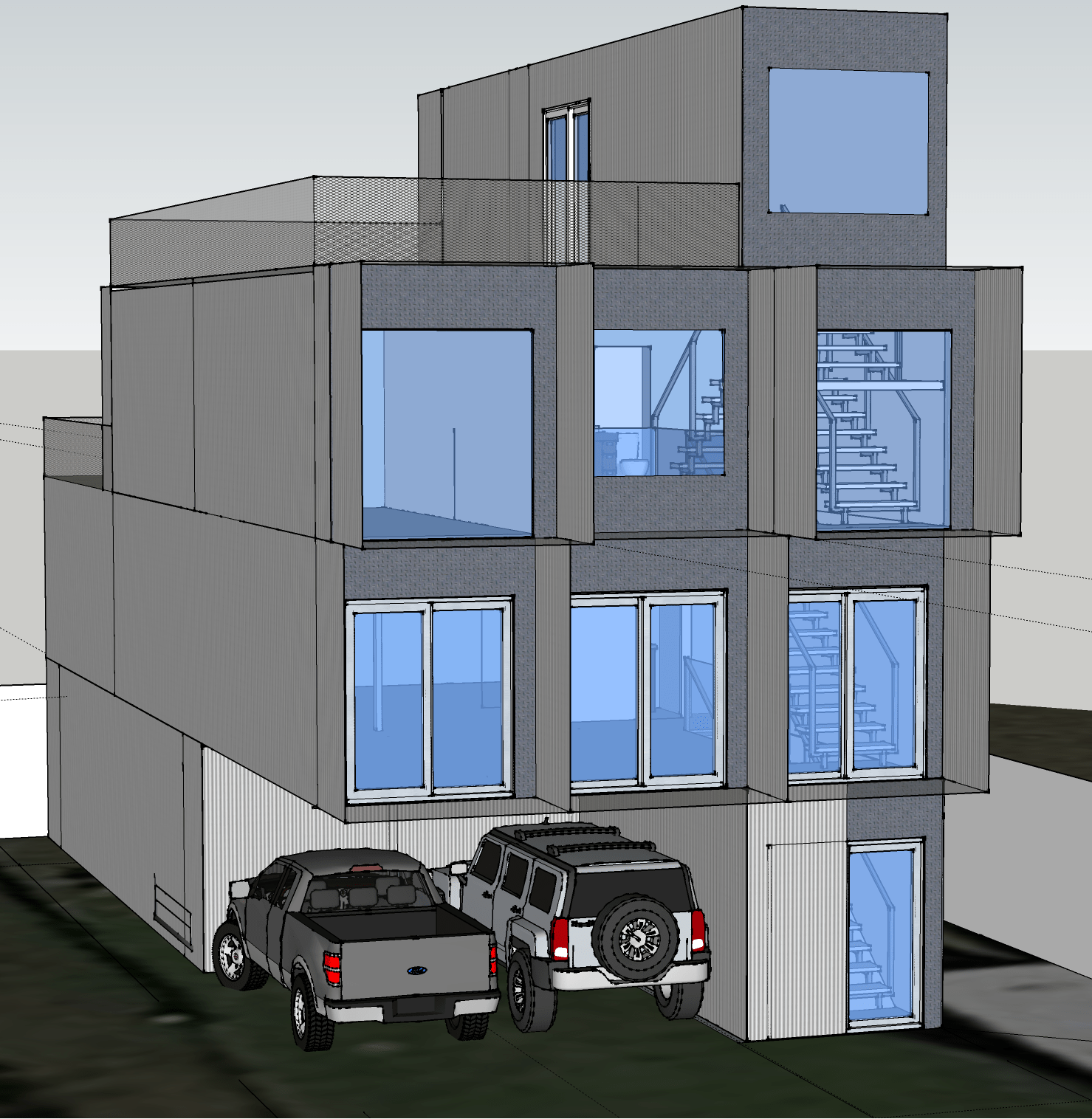
I said that after I got to the point where the containers were stacked and placed, I would provide more info on the challenges and even disaster that happened during the process. Most people who know about what happened I asked “what is the worst thing that can happen during container construction?” The answer always came back as “a container fell” and they were right. In this case, the container had a controlled fall because there was no way to recover it, given the circumstances.
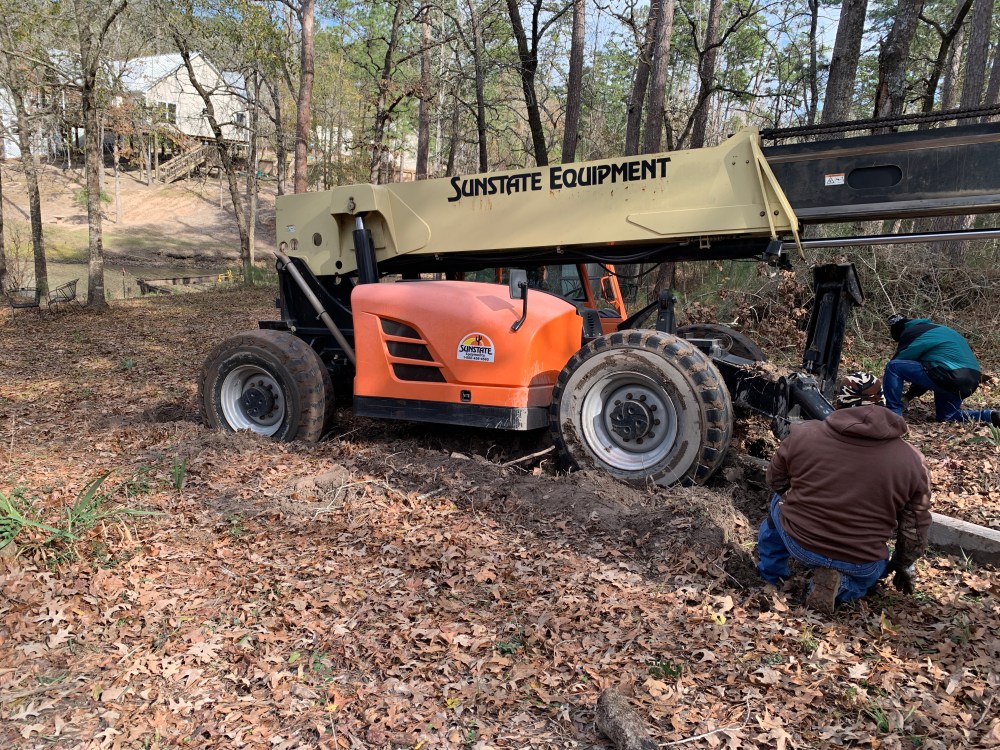
How did it start? Well, we had already gotten the planned 12K lbs telehandler stuck on the first weekend’s attempt. A $650 bill for a heavy equipment towing company and paying a full day rate for operators was a costly mistake. My brother in law works at Sunstate Rental and provided that machine. I can’t recommend them enough. The equipment that I have gotten from them has been really good and this certainly wasn’t equipment failure. But it getting stuck told us that the slope and the soft ground conditions were going to need more attention prior to attempting stacking. We knew we needed tracked equipment and we (really the contractors operating the equipment) built a pad of sorts using some road base material. It seemed like it would work. The first container to be set was the heaviest, due to using it for storage, and the furthest away from the pad. Right before we were going to test the lifting abilities of the excavator, the armature sprung a hydraulic leak. It was not a drip, it was a stream. Apparently the rental company that provided the excavator (maybe I shouldn’t name names here, but they weren’t very united in the quality of the equipment) had already repaired the arm less than a week ago. There was another issue in that we needed to remove the bucket from the excavator to get more height for lifting the containers. The operators had not figured out how to do that on this particular machine though yet. So once the container was rigged up and successfully in the air, I think their excitement overtook the process. What was supposed to be a lift test turned into starting to swing it towards the piers.
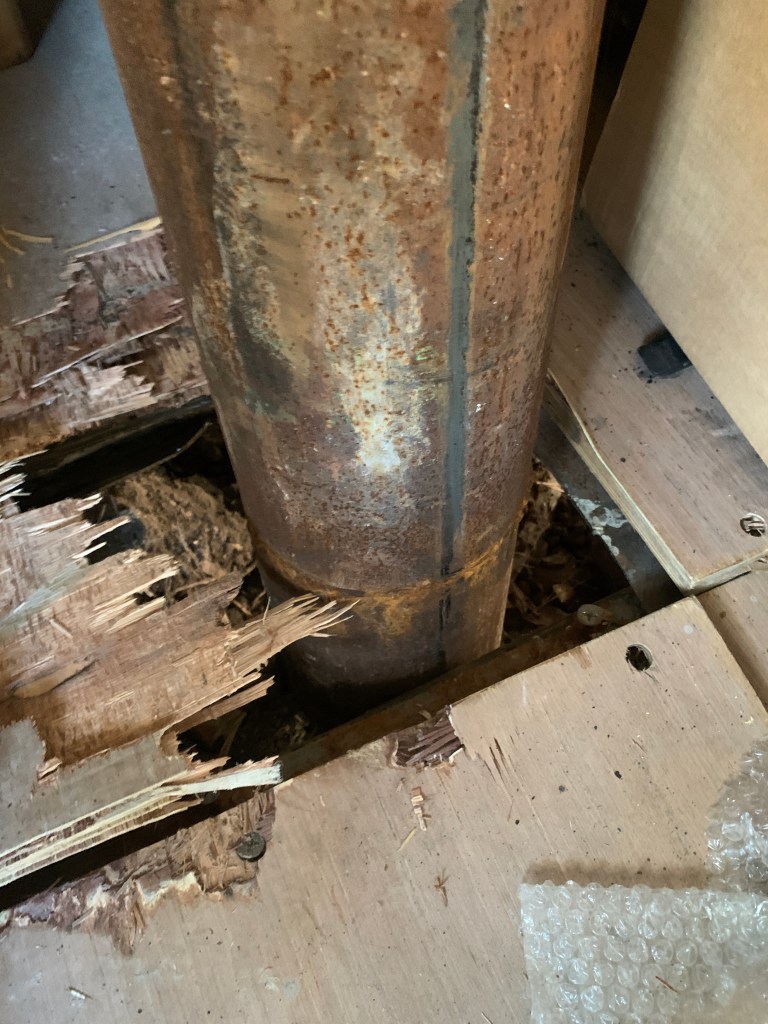
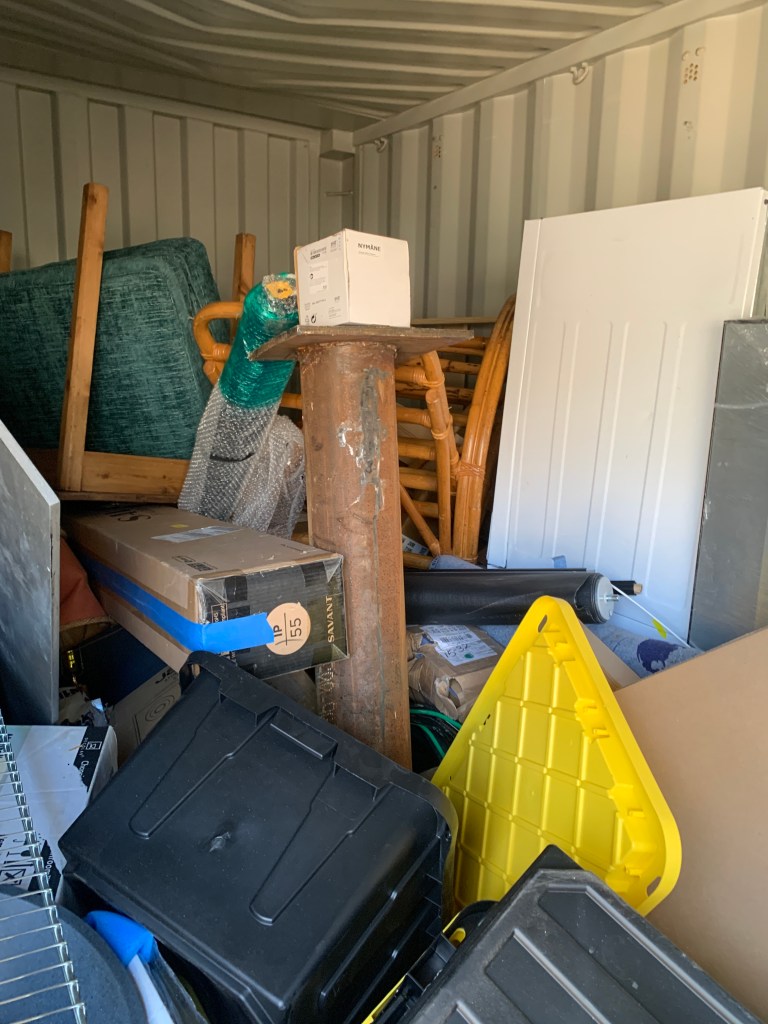
This is when it should have stopped. Test one. Check. But instead, I think feeling confident about it all working OK so far, they went for it. I was surprised because that was not the plan and I didn’t think we were ready quite yet. However, I assisted in tying off the guide rope and helping move container #1 into position. It was all going OK, until it didn’t. As the container moved further away from the machine, that put more weight on the edge of the pad. We were about 6 inches away from proper placement when the front of the excavator sank just enough to where we could no longer clear the top of the pier. We had to back out. What should have been setting it down on other piers that were meant for another container, turned into try to get it completely out of the site. More sinking and more leaking hydraulic fluid meant that there was no longer enough height available to even clear the closest piers. The operator, not being able to see the piers, swung the container into a pier, chains moved, and the container was stuck. With the top plate of the closest pier hanging up on the bottom of the container, we made multiple attempts to try to free it. Nothing worked. He was holding steady and things weren’t getting any worse, but it was only a matter of time before the hydraulic fluid got too low to have any control. After about half an hour in the air and not getting anywhere, I had to make a tough call. The only way out of the situation, was not out, it was down. With a container full of electronics, furnishings, and building material; I decided to give the OK for the container to come down. As it did, too much pressure was being put on a 12″ by 12″ section of wood container floor. This eventually gave way. In a way, this was almost a relief. This made clear what had to be done. We let the top plate of the pier pierce the container floor and go through the bottom of it. We were ultimately able to get the container to the ground and fairly level, with a pier skewering it, of course. After the dust settled, I opened up the container with the contractor to survey the damage.
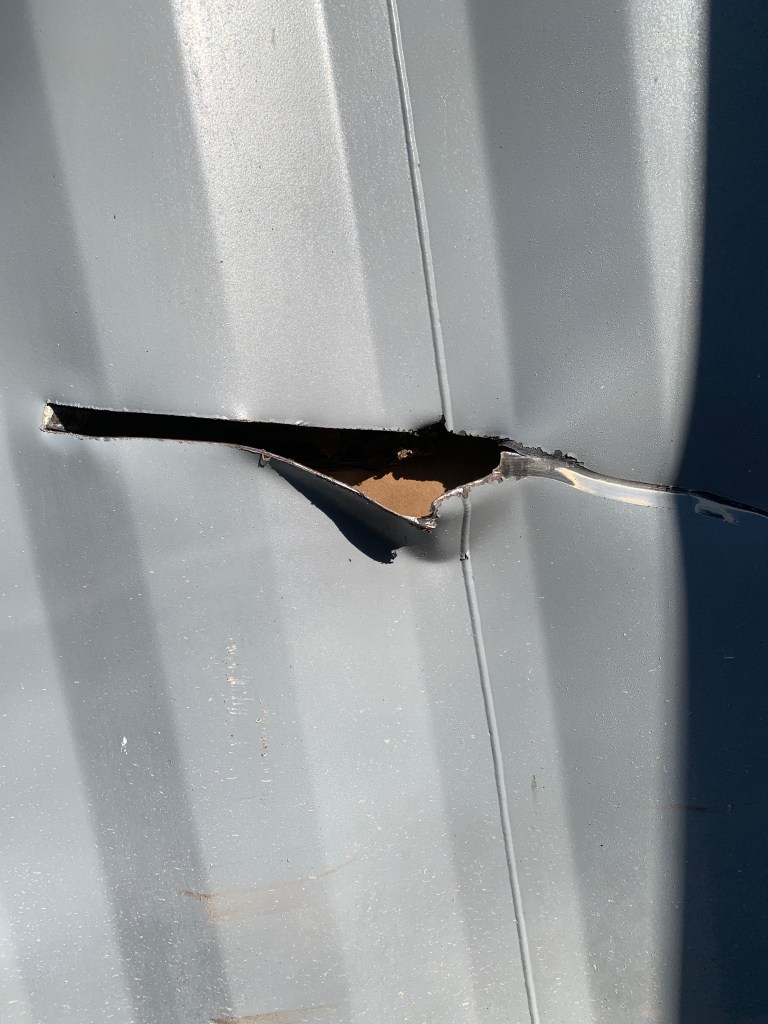
Ultimately, given all of the drama, I was lucky. The pier pierced the container floor and went up through the middle of it in just about the only place in the whole container where something was not on the floor. Inches away from a television, inches away from kitchen cabinets, inches away from furniture and electronics. There is some damage to items from shifting in the violent drop when the container got caught and when the chains moved. But it was the most positive outcome to a really terrible scenario and the one that minimized the damage to everything, including the container. So I do have to repair a gash in the container wall, I have to level out the container ceiling and cover it where the excavator bucket (that should have been removed) caved it in, and I do have to replace the floor where it was pierced. The contractor did take responsibility, paid for a welder to come out and help get the container freed, deducted the expected costs for repair from what I owed them, and did finish the job with successful results. Things happen, there is always a risk in doing something like this, and this was the result of several things – not just one decision. In my opinion, a company who takes responsibility for a mishap and becomes more determined to finish the project as a result is going to be who I would recommend in the future. And for that, I am listing this contractor in my recommended service providers.

 McGowen Container House (and more)