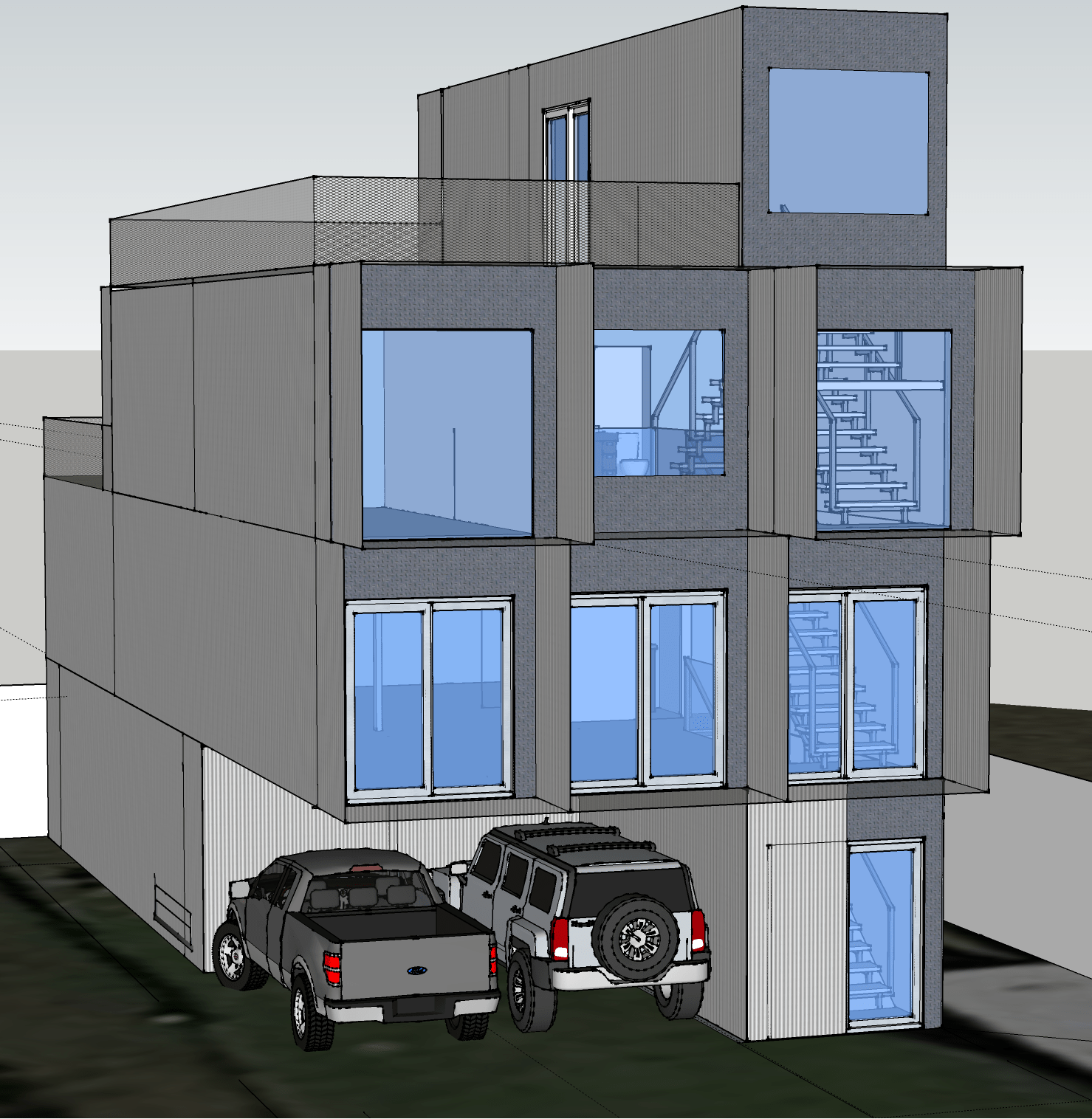
Short post, but the roof for the short container is finished. This is the container that was damaged from the excavator bucket during placement. I had to build up a roof system for two reasons. The roof had some depressions from the damage that would hold water, but more importantly, I needed to raise the height to make it more level with the high cube containers that would make for the second floor deck flooring. The second floor deck will sit on supports that are 2×4’s spanning the sides of the containers to keep weight on the strongest parts. With that being the case and with the difference in container heights, I needed to add height to the standard container so that the decks will be the same level.
I didn’t document this very well, because I had my phone on the other floor while working. But it’s a standard 2×12 truss system using joist hangers. It’s exactly how I did the roof structure for the Houston house. It has about a 1/2:12 pitch to it, which should keep any rain shedding. I realized that I could have saved money (and weight) had I gone with 2×8 or even 2×10. But by the time I made this realization, I had already hand carried all of the lumber down to the site. The reason for buying 2×12 was because I was originally going to make it a flat roof and this was the right size to just sit across the top and span the container sides. It still worked out and although cost more, it prevented me from having to carry 20+ joists back up the slope to exchange. Lesson learned.
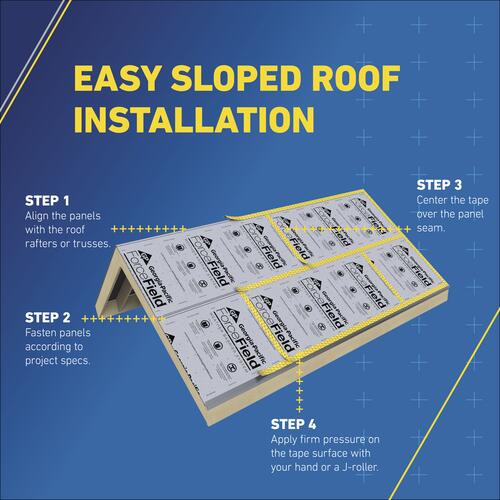
I decided to use a Georgia Pacific sheathing / weather barrier system. Mainly because it was available at Home Depot and because with the price of wood, this engineered system was less expensive. It is basically an OSB impregnated with waterproof resins and then coated. It has a plastic layer adhered to the outside, then you cover seams and nails with their tape. I should have taken pics because it looked really professional before I covered it in the roofing material. I don’t normally endorse products here, especially because I get no funding for it, but I was happy with this product. It was easy to work with and have a good result. I’d consider using it again for another roof or sheathing. I’ve seen the Zip system used frequently but regional agreements / constraints mean that isn’t available in this area. Using something available locally is pretty important if you run short.
Once the roof and flashing were correct, I used a self adhering GAF roofing product. It is similar to standard roofing shingles except that it comes on rolls and has adhesive built in, instead of using nails. Boy, is it sticky. You have to get it just right because there is no room for error once it touches something. I learned that the hard way. I had it almost perfectly done until right towards the end. You can see a seam line and a wrinkle where I tried to correct it. But that is just cosmetic. I will be installing angled 2×4 today, so that the decking can sit on level supports and when that is installed, you won’t even see these minor imperfections. This effectively gives 3 roofs because I have the container roof (that although holds water, is still waterproof), the weather barrier system, then the roof material. With it flashed and sealed correctly, it should be effectively impossible for it to leak.
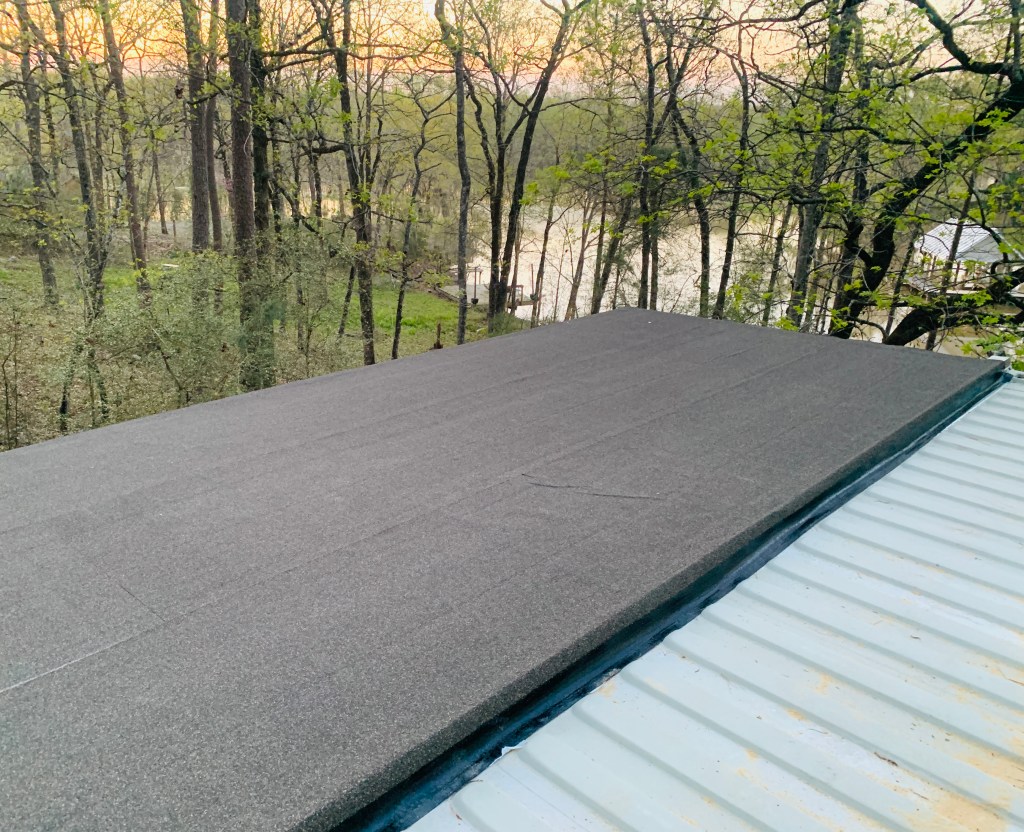
I mostly buttoned up the flashing going down the sides and added feet to level out the decking that will go on top. But overall, I’m happy with these products and the outcome. It was a fairly straightforward weekend project. Now on to gluing in insulation today.


 McGowen Container House (and more)
It turned out great! Great work!
LikeLike