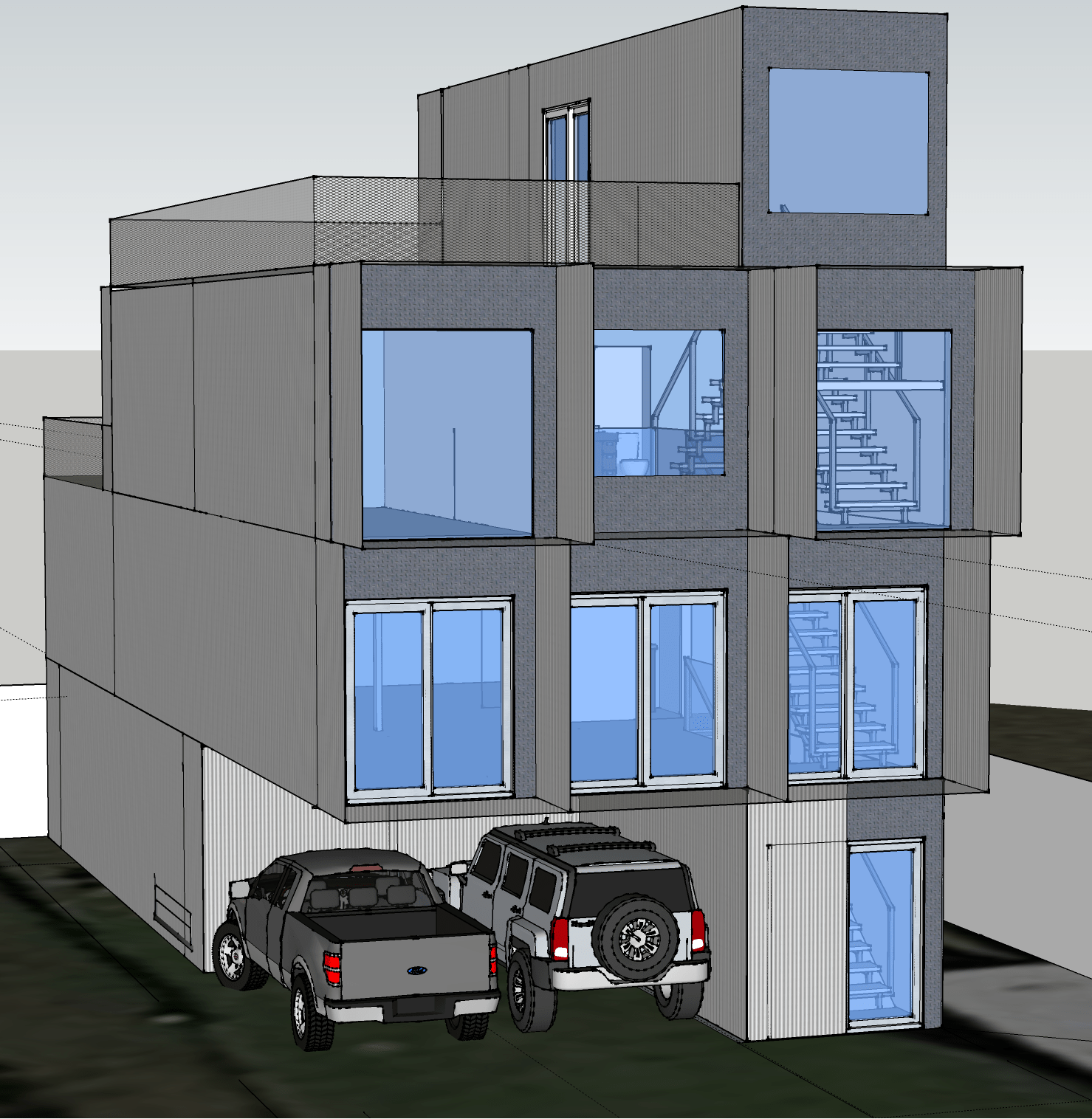
Please read the information on the site first. If you have a question that is not answered on the site, please send a message here. I will try to respond back in a reasonable timeframe, but no guarantees. I get lots of questions.


Press:
The following media outlets have or will have covered the house at some point. Feel free to check any of them out. Unless it is Architectural Digest or Dwell magazine, I am unlikely to do any additional press, since all formats have been covered. The home tour is the only time the house will be open to the public, so don’t trespass.
Houston CityBook – September 2018 issue
Weird Homes Tour – October 2018
KHOU Channel 11 – new story in March 2018
A bazillion blogs have reposted on social media about the McGowen project. I lost count after finding over 100 posts about the Houston project.
Resources (with updates):
The following companies or people are the ones who have helped the project get to where it is so far. I will not list the ones that I may have hired or tried to use without success. These are not endorsements and I am not affiliated with any of them. Please respect that this is their business and do not contact them with questions unless you are ready to pay them for their services.
Structural Engineering – Runkle Consulting. George Runkle and his team has done work on several container projects and is considered to be the expert on shipping container structural engineering. He does not work with residential projects unless you are an experienced builder or designer. So it is probable that you will need to have someone experienced in your team and a set of architectural plans before even considering contacting them. I worked through one of his staff for most things, but in the end, the structural engineering is one of the more seamless items that went through city permitting. I was able to use the same design from the McGowen project for the structural on the lake house. The Runkle files were complete and detailed enough to “combat” the city of Houston when they came back years later.
Containers – Updated: EMS provided the containers and the structural modifications for the lake house project based on my design. The work is expensive but worth it, in my opinion. They also provided the containers for the McGowen project. In both cases, they were given detailed shop drawings from which to work. This is a massive help, because if you were to contact them to do anything structural to a container, you will either have to pay someone for the drawings or provide them.
Numen Development provided the containers for the first project, however I don’t know if they are still involved in container construction. I have purchased other containers through various container yards and have even picked out my own at their location in the past. Most containers come from EMS, but I’m not sure if they would sell one or two by themselves. Containers are commodities, so the prices are determined by supply and demand. Be prepared to pay more than $2000 for a decent used one and more than $3000 for even the smallest one tripper. I’m not a fan of buying new containers for a project because that defeats part of the purpose of reusing something that would eventually go to waste, but don’t discount the value of a slightly more expensive, but better condition container either. I have one, which is unfortunately an important one to have a good roof on it, and it is in need of repair. The cost of the repairs will exceed the price of just getting a better condition one.
Foundation – Updated: DFI provided the engineering, manufacturing, and installation of the pilings / piers for the lake house project. I was able to provide them with enough information in the form of the survey (with elevations), site plan, and weight requirements for them to do all of the work. If you can’t provide all of that and / or you are building in a municipality, you will need much more than that. You will have to have a structural engineer provide all of this.
The foundation was specified by the structural engineer for this project. Because helical piers are not as common in this area, there were limited choices. Chance Helical Piles were used as the piers and therefore one of their local contractors provided the quote and foundation work. The helical piers were topped with concrete tops. I think that this was overkill, in my opinion, because everything around my lot uses standard slab with bell bottom piers. But I now have a commercial grade foundation that should never have issues.
Site Placement / Welding / Container Modification – Updated: EMS provided the modifications to the containers for the lake house project. Charles is still doing work, but for this project, I could not get him involved and instead used EMS for everything. It was a good choice.
Charles Thomas with Crewman Company provided the structural beam that holds up the front of the structure, was on site with his crew during container placement, and was a big help with welding and fabrication that was needed on the assembly day. He also provided the on site fabrication and welding needed to finish it out, although I would no longer recommend doing it that way. Modifications done in a controlled environment have a superior outcome and probably cost less overall.
Crane Service / Stacking – Updated: Kolby Construction, from College Station, provided the equipment and operators to cut down the slope, build a path for the containers, build up a pad for the equipment from which to operate, and ultimately stacked and placed the containers at the lake house. I am fortunate to have found them working on a project in Riverside (close to my lake house) because they are from the Bryan / College Station area. I don’t know if they are still doing construction though.
Laramie Crane provided a 50 ton crane and two riggers. There were some hard workers and skilled professionals on the team. If I were to do this again, I would use a larger crane for longer reach and possibly speedier assembly. The team did work late and through rain to finish the assembly in the one day that was set aside for it.
Electrical – Updated: I did all of the electrical on the lake house project. I have already done the service connection from the meter, trenching and feeder wire, and sub panel connection. For all intents and purposes, the lake house is electrified. The remainder of the interior work should be simple in comparison to that. But the county I am in requires no electrical inspections and I am skilled enough to do it for my own project.
Other – Sean Krieger is another builder in the Houston area. He is built a container home near the McGowen project. He is the builder, designer, manages fabrication, and does some of the engineering. He focuses on budget builds, so his style may not be to everyone’s tastes, but I have visited his project and spoken with him at length after this project was already started. He definitely knows the ins and outs of working with the city on these builds, but I don’t know if he does this any longer.
Mike Dieterich is someone else I met after this project was underway and has become a friend. He also does this as a business. He is an eco-friendly builder that also does net zero energy structures. He often uses containers. He was just recently featured in the Houston Chronicle for his work.
 McGowen Container House (and more)