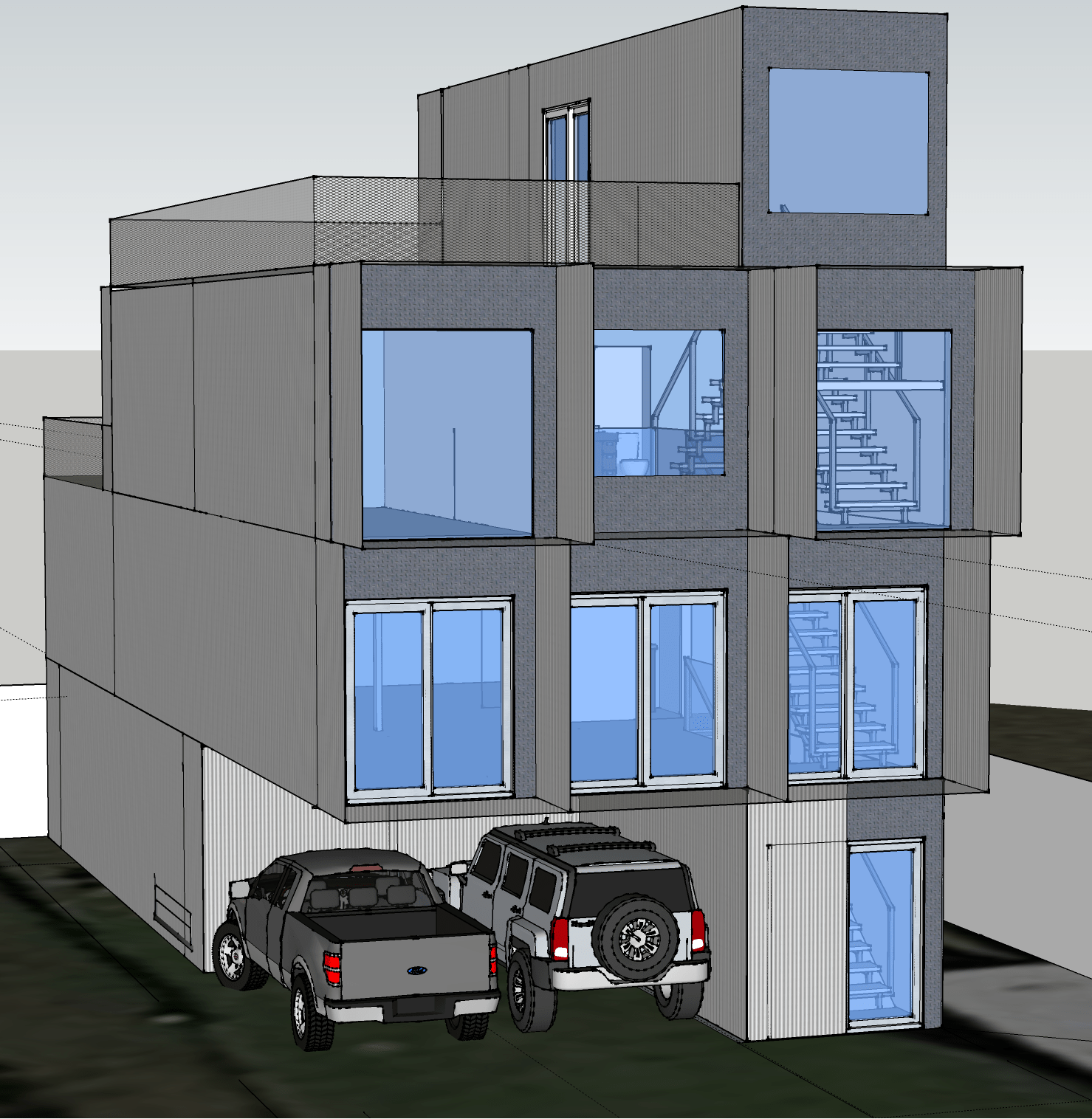
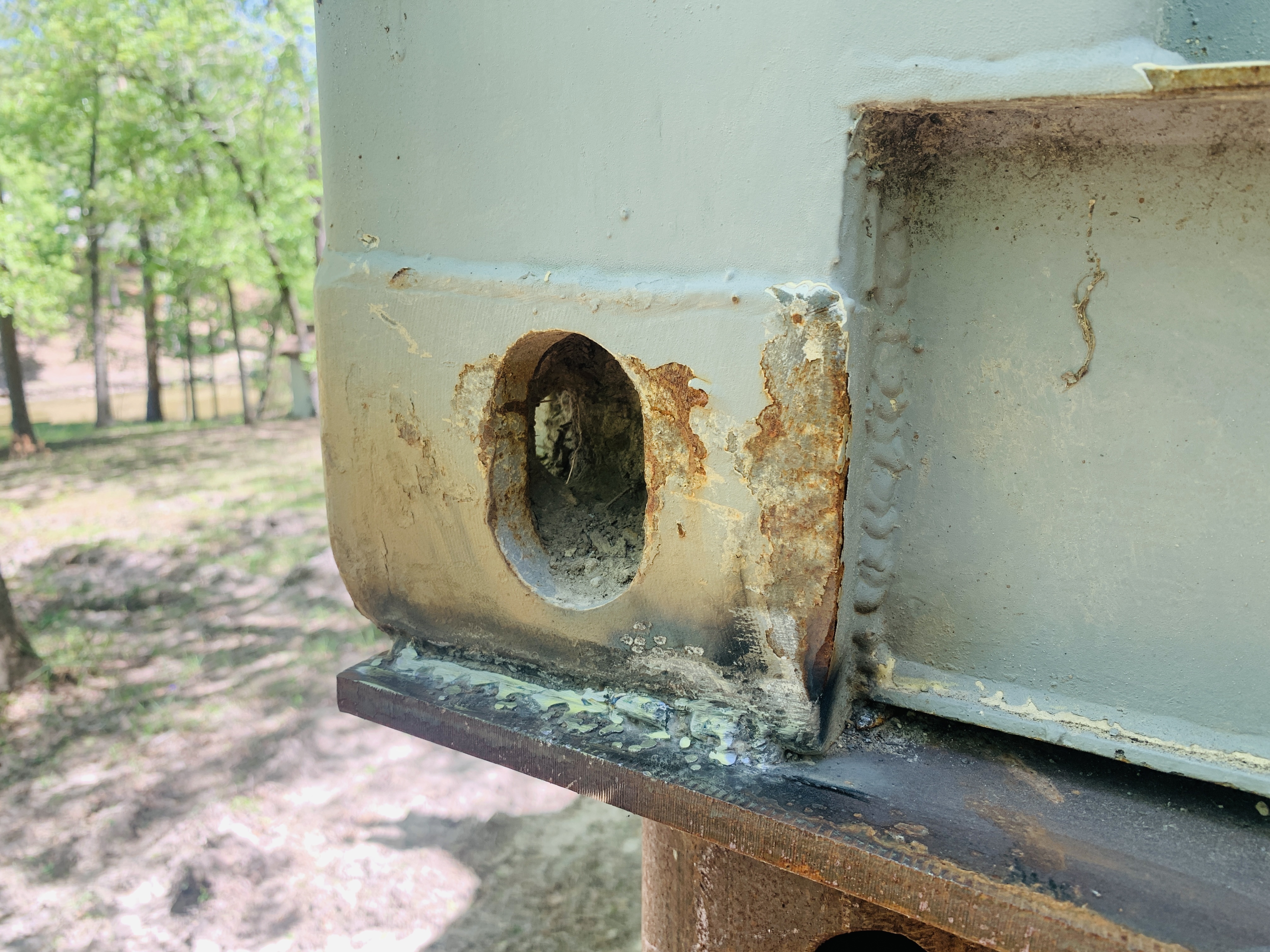
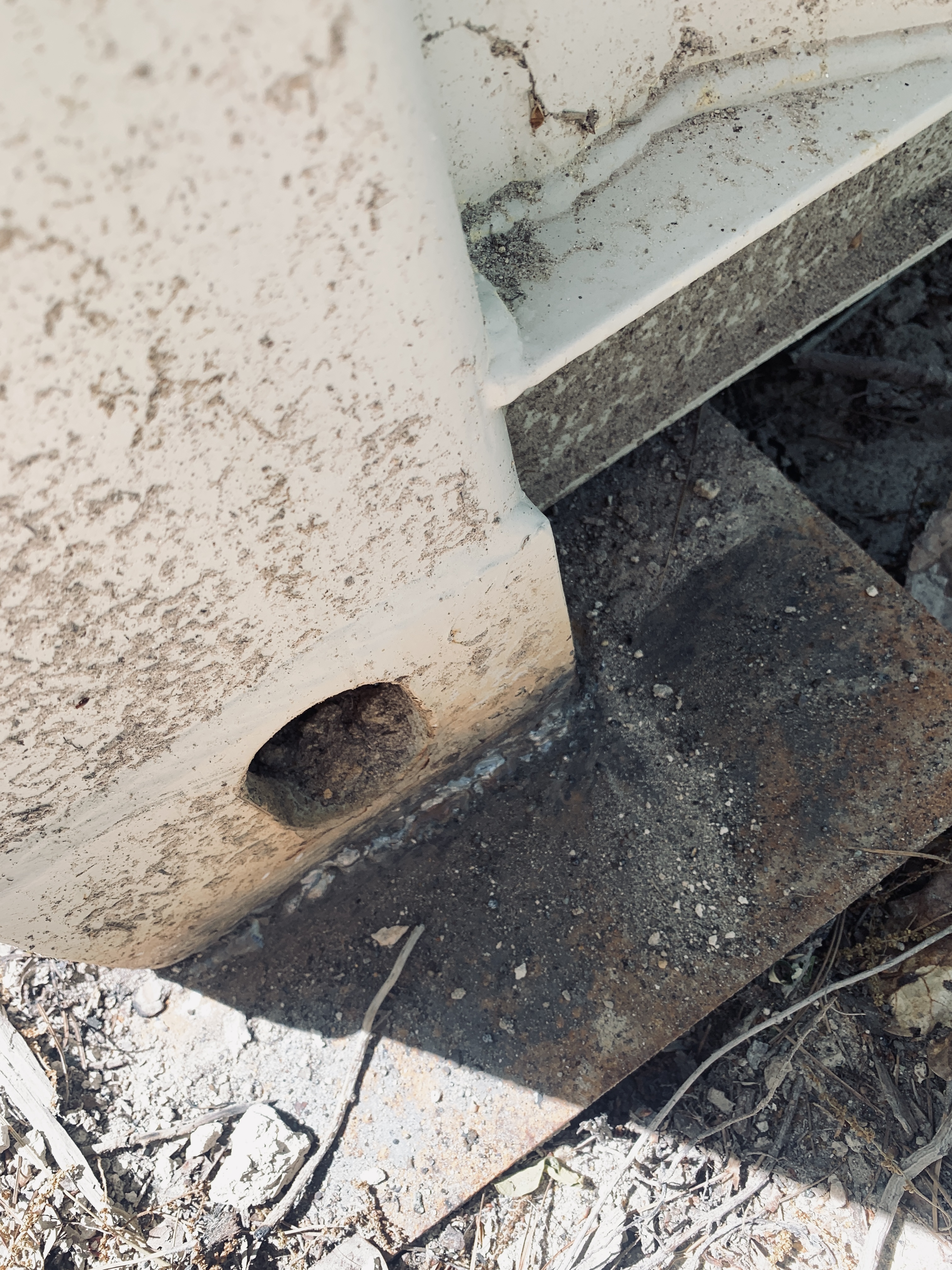
I received a quote to weld the containers to the piers. I thought it was excessive at $1600 for what I calculated to be about 8 linear feet of welding, even if some of it requires being on a ladder. So I bought a stick welder on Amazon for $160 and thought it wouldn’t be a huge waste if I couldn’t do it myself. I put it off for several weekends but decided it was time to give it a shot. Keep in mind that I am not a pro and even though I’ve welded before, it was not with a stick welder. Also these containers are bolted together, so even without welding them to the piers, it’s not going anywhere. Welding them together just adds even more stability and reassurance, so all I really need to do is lay enough metal with the welds to join them. I gave it a shot and it worked out. Most of the welds can’t be seen up close so aesthetics weren’t the priority. I got better at it and even though the little welder got good reviews, even by some pros, I can say that it was an excellent purchase. I saved over $1k, it only took me four hours, I have a welder I can use again and again, plus I learned a new skill (mostly). I’m not very patient with detail work, so my welding and grinding could use some polishing (pun intended) just for cosmetic reasons. I wouldn’t attempt welding anything truly structural, even after this experience, but for tacking things up or down, I can check off that skill box.
After being in a welding mask for a few hours, I figured it was time to do some cutting. I needed to make the cutouts for both of the HVAC units that go in the bedrooms, so I got started on that. To make sure I cut and framed the right sizes, I assembled the sleeves and grilles. Nows probably the time to talk about HVAC choices.
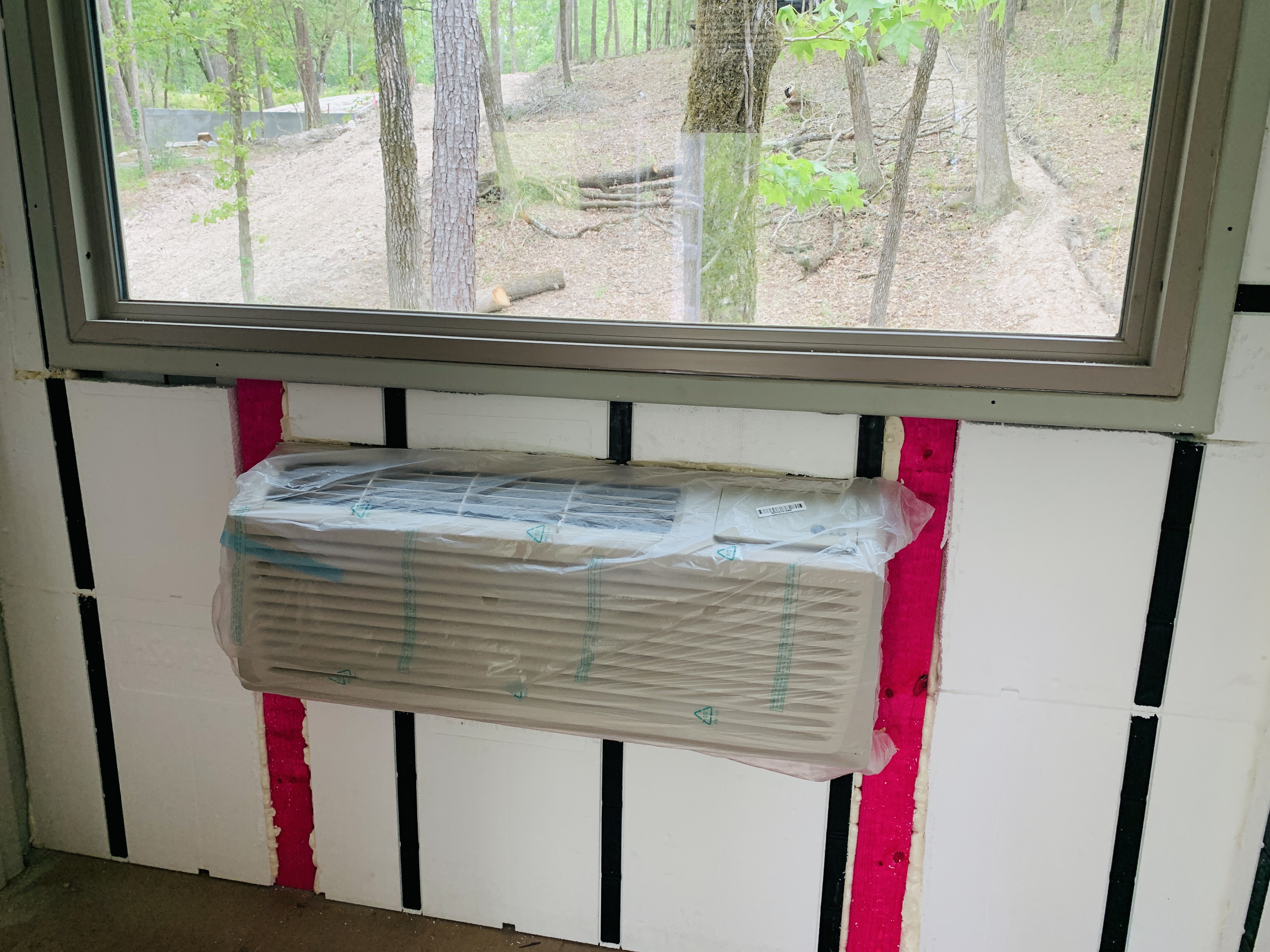
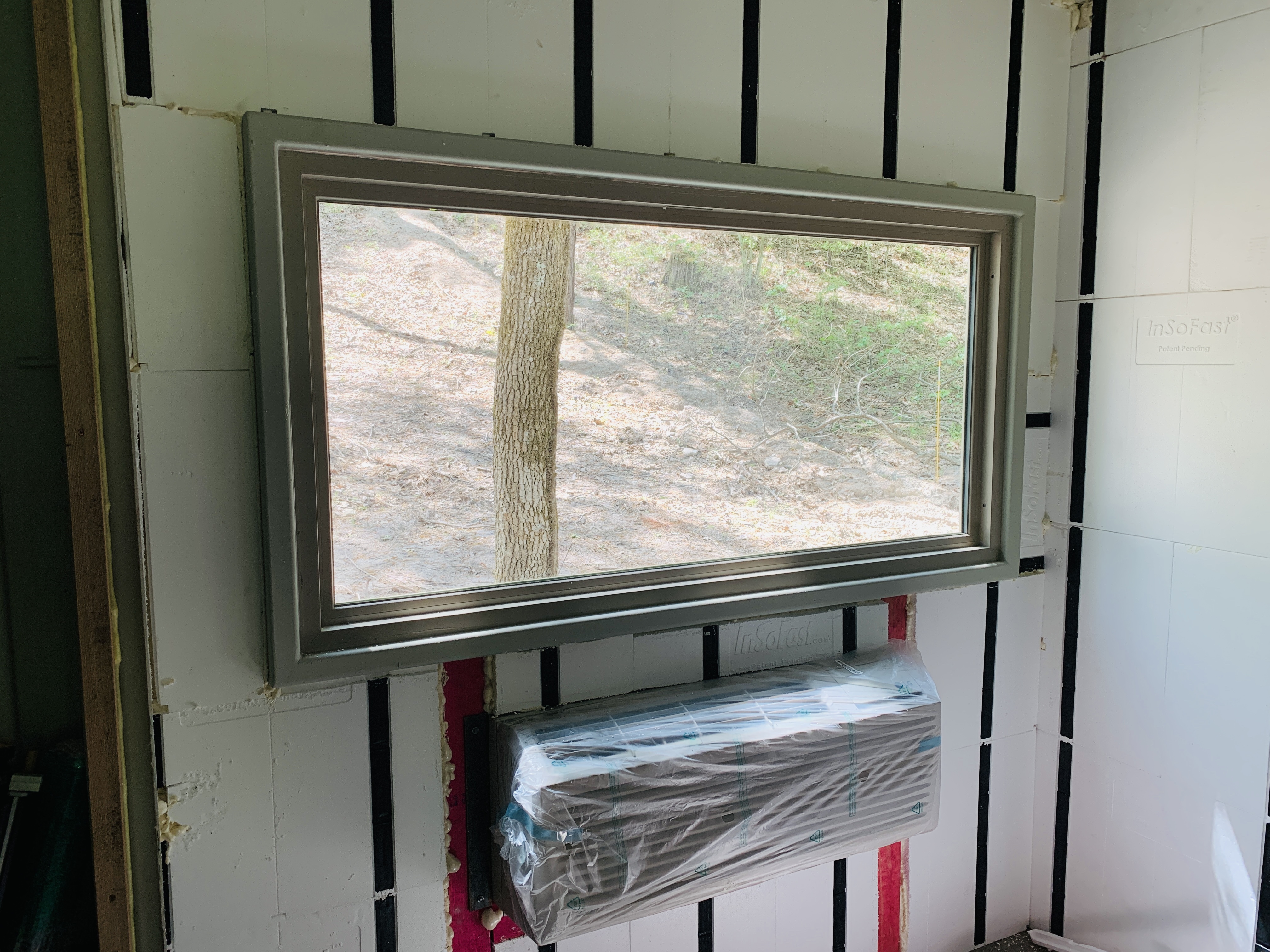
I grew up, like most people I know, with central heating and air. That has an indoor handler and an outdoor unit that push air through ducting in the house. Pretty much the standard in the US. In recent years, mini split has been catching on. You see that all over Asia but it is becoming more popular here. It reduces or eliminate the ductwork and shrinks the size of the interior and exterior units. But it’s not perfect either. I have that at my current home and while it’s efficient, it doesn’t have the power to quickly cool down a space. You pretty much have to run it all the time to keep it comfortable. It is a dual zone unit and I have found that both zones have to be on the exact same setting, otherwise no dice. So during times of the year, when the temps can fluctuate 40 degrees from day to night (like now), it can cause the system simply to not function. Plus using third party thermostats is a challenge. In the area of the lake house, it’s common to see window units. I didn’t want to go that route for many reasons, but didn’t want the expense of other methods either. I landed on PTAC (packaged terminal air conditioner) by LG. It has the efficiency near that of mini split, works well with thermostats (so everything in the house can be smart), needs no ducting, I can install it completely by myself, it is used extensively in commercial environments like hotels, and isn’t quite as unsightly as window units. Seems like a winner. I have 3 units going in: one in each bedroom and one in the main open area. I decided the two bedroom units should be under the windows to be the same on both floors. This was a new process for me, but plasma cutting and framing was nothing new. I’ll say it again, plasma cutters are the best investment you can make if working on or modifying containers. I cut out the opening, test fit the sleeve, framed it up, sealed it, and test fit the unit. It wasn’t easy but it went pretty smoothly. I upgraded the exterior grilles and there is a tree obstructing the view of both units, so once it’s painted the same color as the house, it’ll look pretty decent. I also insulated both of those wall sections. End walls require a two step insulation panel process. So instead of a single panel in the corrugation, it requires corrugation inserts, followed by flat panels. That plus all of the framing and windows made for lots of styrofoam cutting. Now all of the insulation is complete for areas that have wall penetrations. The last of the insulation should be smooth sailing.




 McGowen Container House (and more)